Ever wondered how seemingly commonplace ideas transform into multimillion-dollar start-ups? It goes without saying that the founder’s persistence and hard work play a major role. Even then it’s hard for some of us to be at peace with the fact that a venture could succeed with such a simple albeit bland ideological foundation. An epiphany I had while reading the famous novel “1984” might offer one possible explanation for this paradox.
So here is the context; the protagonist is having a conversation with the female lead character where she is relating her absolute disregard for the established social dogmas and rule of law. As the conversation progresses, the protagonist keeps getting awe-inspired (read turned on) by the female when all she is doing is telling him about her exploits of breaking the law. But in the dystopian world where they live in, her actions seem to go against all sane reasoning. In other words, she is doing things 180 degrees opposite of how you are supposed to do them. So is this it? Is this the elixir of ingenious ideas? Taking a conventional practice and turning it on its head?
Barry Nalebuff and Ian Ayres in their book “Why Not?” propose just that. They discuss a technique of flipping things to come up with new ingenious solutions to a problem. But it’s not that simple. In order to utilize their approach one must strip the problem/process to its bare essence where a single sentence could completely define it in its entirety. A crude example would be that of a taxi service. How can one define the process of using a taxi to go from point A to point B? Here is my feeble attempt:
“A customer calls a taxi, gets inside and tells the driver where to go and after reaching the destination, pays the fare displayed on the meter.”
Now in the above statement, two words can be deemed as pivotal verbs, the word “call” and the word “pays”. If you flip the roles of people about those verbs you will end up with a different business model. Instead of the passenger calling the driver, why not have the driver call the passenger and instead of the customer paying on reaching the destination why not have the customer pay a predetermined amount even before the journey starts. The following will be key characteristics of this new business model:
- Customers, who are not under any kind of time constraint, post their destinations on a web platform and also state the price they are willing to pay.
- Taxi drivers who aren’t hired are able to view these posts and if they happen to be heading in the same direction, accept the job.
The above example is rudimentary. The motive was to give a general idea of how the technique of flipping it works. So would this idea be successful? There are other things at work that need to be understood first. In 2011, TIME Magazine did a cover story titled “The Optimism Bias” in which it was argued that human brains are hard wired to be optimistic. Even when we show a tendency for group pessimism on issues such as the global economy or politics, on a personal level, most of us see our future selves in a better position relative to others. This is how a healthy brain is wired to think. So when a totally different approach of solving a problem is presented to us, our first impulse is to imagine future scenarios where that particular solution can be viable. This is where an effective marketing and more specifically, advertisement strategy, comes into play. Advertisements (and politicians) that catch people’s imagination by promising them a brighter future usually succeed.
But beware; going after a red ocean with a revolutionary idea will yield different results. If you were to come up to me and say you have a solution better than Uber’s, I will not even give you the courtesy of hearing it out. Why? Primarily because of my anchor bias. The ride sharing industry was recently revolutionized. I am still in awe of Uber's brilliance to give your idea any heed. However, 5-10 years down the line, things might be different. That may not be the only reason for my ignorance. Industries that are littered with carcasses of start-ups that failed to differentiate themselves or deliver on their promises also tend to eventually become toxic towards the entrepreneurial culture.
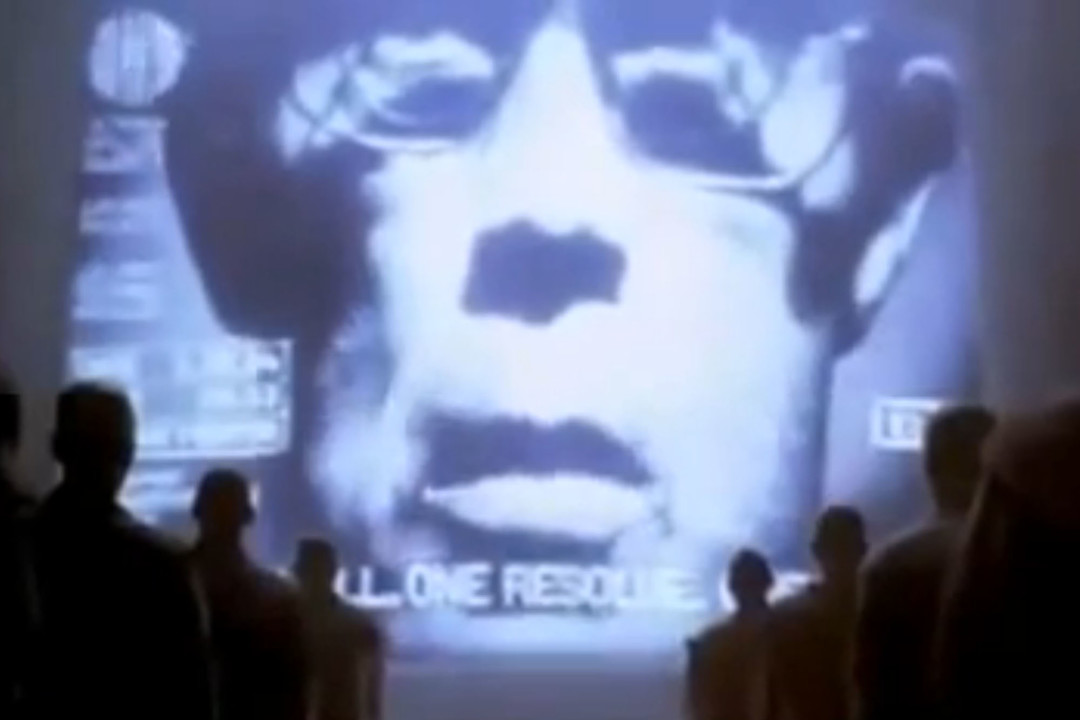
Finally, I will round up this article by talking about one of the most valuable companies in the world, Apple. There was a time when the word “technology” and the word “complexity” used to go hand in hand. Then Apple came into the picture with its simplicity mantra and the industry was revolutionized. Hence a simple idea, inverse of the norm, properly marketed to catch customers' imagination is a sure win. Remember Apple’s 1984 Super Bowl commercial?
“On January 24th, Apple Computer will introduce Macintosh. And you’ll see why 1984 won’t be like “1984”.