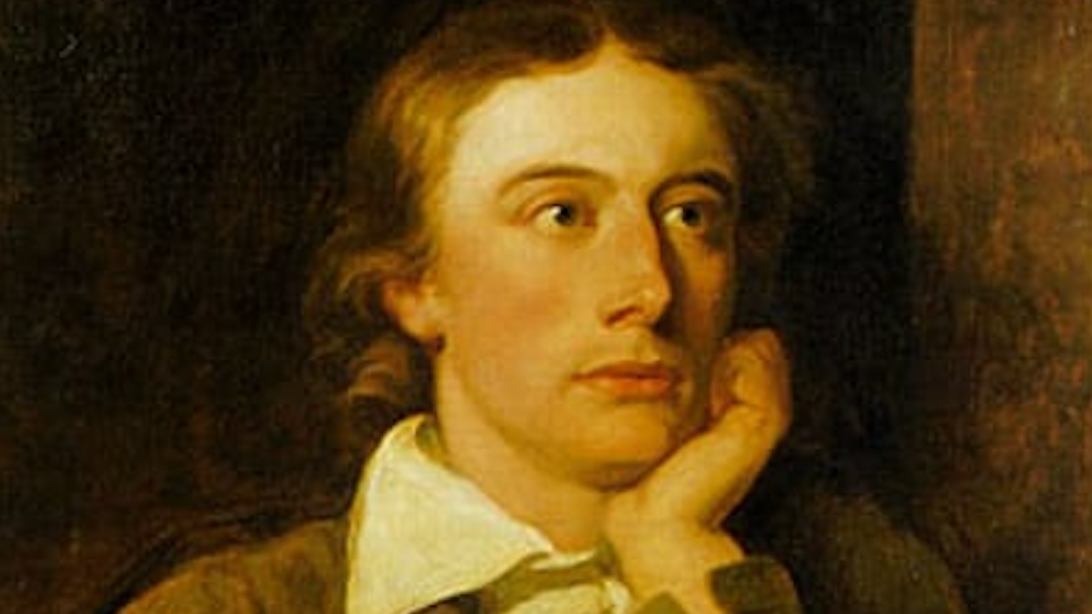
I just finished reading John Keats biography. The book remained unread on my bookshelf for nearly a decade. It was after visiting his grave in Rome that I finally decided to read it.
John Keats was a famous, Romantic era English poet. Even though he died young (aged 25), he produced some of the most seminal works of the world of poetry.
His poetry career had two distinct phases:
Phase One:
Early on, he tried his best to copy the style and tone of the famous poets of his day (William Wordsworth, Leigh Hunt etc.) Like most beginners, his goal was to impress others and to woo girls. As a result, the output was your run-of-the-mill poems with a heavy dose of cheesiness.
Phase Two:
Over time, he started becoming interested in philosophy. The interest was in part fueled by him becoming an avid reader of Greek tragedies and attending lectures of the famous philosopher, William Hazlitt. He started seeing poetry as a way of fully immersing himself in the experiences of the world. He wrote:
“A poet is the most unpoetical of anything in existence; because he has no Identity — he is continually in for — and filling some other Body — The Sun, the Moon, the Sea and Men and Women… When I am in a room with People, if I ever am free from speculating on creations of my own brain, then not myself goes home to myself: but the identity of everyone in the room begins to press upon me, that I am in a very little time annihilated — not only among Men; it would be the same in a Nursery of children.”
He also realized that intellect can only take you so far in life. It’s when you fully embrace the hardships and the joys, the ugliness and the beauty, the chaos and the serenity of life - that’s when you transform into someone larger than yourself, larger than your circumstances. In one of his letters, he said:
“Call the world if you please ‘The vale of Soul-making’… there may be intelligences or sparks of the divinity in millions— but they are not Souls till they acquire identities, till each one is personally itself.”
Once he realized the above, his work became immortal.
So what does any of this have to do with marketers?
A recent study from Stanford indicates that in occupations most exposed to AI, workers between the ages of 22 and 25 have experienced a 13% decline in employment. And young marketers are suffering the most. The following chart illustrates the decline in employment opportunities since 2022:

Who is taking those jobs? LLMs! But do you know a secret that no multi-billion dollar AI tech companies are willing to admit? LLMs, in essence, are just statistical parrots (well, to be fair, you can do a lot with a flock of parrots. I’ll write a post on that soon. For now, read this). They are just regurgitating what they’ve already seen. They lack the ability to form new experiences and assign feelings to them. The quality of work they’ll create can hardly be better than the quality of John Keat’s work during the first phase of his career.
But as communicators, as storytellers, you have an edge over LLMs: you can incorporate lived experiences in your work. Let’s say you’re competing with an AI for a marketing job at a Flower shop. Do you realize the advantage you have?
Ask ChatGPT to generate an image of a real and a synthetic flower. It’ll create the same image. But you know that even if both an artificial and a real flower look the same, the way they feel when you touch them, the way they smell, is completely different. And, unlike an LLM, you probably have a childhood memory - involving flowers - that you are really fond of. Incorporate that in your work. Also, sprinkle your work with philosophy that only you, a human, can fully appreciate and effectively communicate.
Stop chasing mindless jobs best suited for mindless machines. Let software manage software. Instead, strive to become a true creative. Craft campaigns that make it way easier to identify AI-generated fluff being promoted by everyone else.
Doing what others have already done is not enough anymore. Make your potential employer choose you - not for what you know but for who you are.